


Managing "Immediate Use Steam Sterilization" (IUSS) in Trauma Emergencies
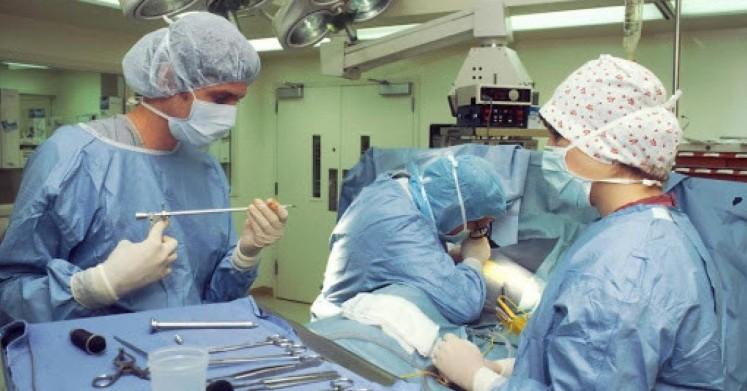
In the high-pressure environment of a trauma center, every second counts. When a critical, one-of-a-kind surgical instrument is contaminated mid-procedure, the surgical team faces a difficult choice: wait for standard terminal sterilization or utilize "Immediate Use Steam Sterilization" (IUSS). Formerly known as "flash sterilization," IUSS is a process designed for the rapid cleaning and sterilization of patient care items for immediate use. While it is an essential tool in a surgeon's arsenal during life-or-limb emergencies, it is not a shortcut for poor inventory management. Navigating the complexities of IUSS requires a deep understanding of microbiology, steam physics, and stringent regulatory standards. Professionals who have completed a sterile processing technician course are specifically trained to manage these high-risk scenarios, ensuring that even in the chaos of a trauma emergency, patient safety is never compromised.
The Critical Role of Decontamination in IUSS
One of the most dangerous misconceptions in the operating room is that the high heat of an IUSS cycle can compensate for inadequate cleaning. This is a fatal error. Regardless of how fast an instrument is needed, it must undergo the same rigorous manual cleaning and decontamination as it would for any other cycle. If bioburden, such as blood or tissue, is left on the instrument, the steam cannot reach the surface underneath, resulting in a non-sterile device. In a sterile processing technician course, students spend significant time learning how to dismantle complex trauma instruments to ensure every lumen and crevice is brushed and flushed. In a trauma emergency, the pressure to skip these steps is immense, but the technician must serve as the final gatekeeper of safety, ensuring that "fast" never means "dirty."
Furthermore, the 2026 standards require that all items processed via IUSS must be able to withstand the specific parameters of the cycle. Not all instruments are validated for the high temperatures (typically $132^\circ\text{C}$ to $135^\circ\text{C}$) used in IUSS. Using an unvalidated cycle can damage delicate instrumentation or lead to a "wet pack," which is an automatic failure of sterility.
Aseptic Transfer and Transport Protocols
The most vulnerable moment for an IUSS-processed instrument is the journey from the sterilizer to the surgical field. Because the items are often hot and may have residual moisture, they are "magnets" for airborne contaminants and microbes. To mitigate this risk, modern trauma units use specialized "IUSS Containers"—rigid, closed systems with filtered vents that allow steam in but prevent bacteria from entering after the cycle. The technician must use heat-resistant gloves and follow a strictly defined path to avoid high-traffic areas.
In 2026, the use of open trays for IUSS is largely considered obsolete due to the high risk of contamination. If a closed container is not used, the instrument must be protected by a single-ply wrap or a specialized "express" cover. However, even with these precautions, the instrument should be used immediately. It cannot be set aside for a "later" part of the case or held for the next patient. Documentation must include the name of the patient, the sterilizer ID, the cycle parameters, and the results of the Class 5 or Class 6 chemical indicators. This level of meticulous record-keeping is a core competency of the sterile processing technician course, ensuring that if a surgical site infection (SSI) occurs weeks later, the hospital can prove exactly how that instrument was handled.
Monitoring and Quality Assurance in Emergency Settings
Quality assurance doesn't stop just because the situation is an emergency. Every IUSS load must be monitored with physical, chemical, and—where possible—biological indicators. For many trauma implants, such as orthopedic screws or plates, IUSS is generally prohibited unless it is a "documented medical emergency." In these rare cases, a rapid-action biological indicator (BI) must be run with the load, and the implant should ideally be "quarantined" until the BI result is known. However, in life-saving trauma surgery, the implant is often released before the BI result.
Lenders and accrediting bodies like The Joint Commission look for a "Whole-Hospital" approach to IUSS reduction. This involves analyzing IUSS logs to identify patterns. If a certain orthopedic tray is being "flashed" every Tuesday, the problem isn't the emergency; it's the inventory. A leader in the Sterile Processing Department (SPD) uses this data to advocate for more instrument sets. This analytical approach to safeguarding is a significant portion of a modern sterile processing technician course. By turning raw data into actionable insights, the technician moves from being a "worker" to being a vital consultant in the hospital’s infection prevention strategy, ultimately reducing the facility's reliance on IUSS and improving overall patient outcomes.
Conclusion: The Professional Standard of IUSS Management
Immediate Use Steam Sterilization remains a necessary "safety valve" for trauma surgery, but it requires a level of precision and ethical commitment that only comes with professional training. As medical technology continues to evolve, the protocols for rapid reprocessing will only become more complex. For those looking to make a difference in the operating room, the path starts with education. A sterile processing technician course is the only way to gain the foundational knowledge required to manage IUSS safely and effectively. It equips you to stay calm under pressure, to uphold the highest standards of microbiology, and to act as the ultimate advocate for the patient lying on the table.

 English
 Arabic
 Spanish
 Portuguese
 Deutsch
 Turkish
 Dutch
Dutch
 Italiano
 Russian
 Romaian
 Portuguese (Brazil)
 Greek
Greek