

How Data Integration and Analysis Are Streamlined Through Modern Fisheries Software
Fisheries research generates enormous volumes of diverse data—tag detections from automated readers, biological samples with genetic and age information, environmental measurements from sensors, harvest records from commercial and recreational fisheries, and habitat assessments from field surveys. Managing these heterogeneous datasets, maintaining data integrity, and extracting meaningful insights through analysis historically consumed substantial time and expertise, often creating bottlenecks between data collection and actionable knowledge.
Modern computational tools have revolutionized this landscape. Sophisticated fisheries software for comprehensive data management now integrates disparate information streams, automates routine analyses, visualizes complex patterns, and supports collaborative workflows across institutions and agencies. Understanding how these platforms streamline research operations reveals their transformative impact on fisheries science and management effectiveness.
Centralized Data Management and Integration
Traditional fisheries research often fragmented data across multiple systems—spreadsheets on individual computers, databases in separate agencies, field notebooks in filing cabinets, and analytical outputs scattered across personal directories. This fragmentation created inefficiencies, version control nightmares, and barriers to collaborative analysis. Data integration required manual compilation, format conversions, and extensive quality checking—processes consuming weeks or months before analysis could begin.
Modern fisheries software platforms provide centralized repositories unifying diverse data types under consistent management frameworks. Tag detection records from passive integrated transponder systems, biological measurements from sampling events, genetic analyses from laboratory workflows, and environmental data from monitoring networks all populate common databases with standardized formats and controlled vocabularies.
This integration eliminates redundant data entry and format conversion labor. Detection data from reader downloads automatically populate databases without manual transcription. Laboratory results upload directly from analytical instruments. Field observations enter through mobile applications syncing with central systems. The time savings prove substantial—what once required days of data preparation now occurs in hours or minutes through automated pipelines.
Data integrity improves dramatically through validation rules, referential integrity constraints, and automated quality checks. Software prevents entry of biologically impossible values—fish lengths exceeding species maximums, negative weights, detection dates preceding tag deployment. Cross-reference checks flag suspicious records—tag codes not matching any deployed tag, sampling locations outside study boundaries, or duplicate entries. These automated validations catch errors immediately rather than during analysis when corrections prove difficult.
Streamlined Analysis Workflows
Beyond data storage, modern platforms incorporate analytical capabilities reducing barriers between data and insights. Built-in statistical functions, visualization tools, and reporting templates enable researchers to progress from raw data to publication-quality outputs without exporting to multiple external software packages.
Mark-recapture analyses—fundamental to population assessment and survival estimation—benefit enormously from integrated analytical tools. Software automatically structures detection histories from raw tag records, calculates encounter probabilities, estimates survival rates using appropriate statistical models, and generates confidence intervals. What once required statistical programming expertise and hours of data manipulation now executes through guided interfaces accessible to users with modest statistical training.
Growth analysis tools accept length and age measurements, fit von Bertalanffy or other growth models, compare parameters among populations or time periods, and produce standardized growth curves. Researchers specify data sources and model options through intuitive interfaces rather than writing custom code—democratizing sophisticated analyses previously limited to specialists.
VodaIQ platforms recognize that different researchers bring varying analytical expertise. Systems provide both simplified interfaces for standard analyses and extensibility for advanced users implementing custom methods. This tiered approach serves diverse user communities—field biologists needing routine stock assessments alongside quantitative researchers developing novel analytical techniques.
Visualization and Pattern Recognition
Extracting meaning from large datasets often depends on effective visualization revealing patterns invisible in tabular data. Fisheries software incorporates sophisticated graphical capabilities transforming numbers into insights through maps, time series plots, population pyramids, and interactive dashboards.
Spatial visualization maps tag detection locations, sampling sites, habitat characteristics, and harvest distributions. These maps reveal migration corridors, critical habitats, and spatial population structure that inform management zoning and protection priorities. Interactive features enable zooming, filtering by time periods or demographic groups, and overlay of environmental layers—supporting exploratory analysis revealing relationships among biological, physical, and anthropogenic factors.
Temporal visualizations document population trends, seasonal patterns, and environmental correlations. Time series plots show whether populations are increasing, stable, or declining—fundamental information for harvest management and conservation status assessment. Seasonal detection patterns reveal migration timing, spawning periods, and behavior shifts informing regulatory timing and monitoring strategies.
Population structure visualizations—age pyramids, length frequency distributions, sex ratios—characterize demographic composition. Pyramids skewed toward old individuals suggest recruitment failure, while those dominated by young fish indicate recent successful reproduction. Comparing structures across years, locations, or management treatments reveals demographic responses to environmental changes or management actions.
Automated Reporting and Communication
Converting analytical results into reports for managers, policymakers, and stakeholders traditionally consumed substantial time formatting tables, generating figures, and writing summaries. Modern fisheries software automates much of this process through report templates, scheduled reporting, and dynamic document generation.
Templates define standard report structures—perhaps annual stock assessments or quarterly monitoring updates—that automatically populate with current data. When new data become available, regenerating reports requires clicking a button rather than hours of manual updating. This automation ensures timely reporting without sacrificing staff time needed for analysis and interpretation.
Dynamic documents embed live data queries, meaning reports automatically reflect the most current information. Rather than static snapshots potentially outdated by the time they're distributed, these living documents provide real-time status assessments accessible to stakeholders whenever needed. Version control systems track changes, maintaining audit trails documenting when information was updated and what changed.
Stakeholder portals provide public access to appropriate information while protecting sensitive data. Recreational anglers might access harvest statistics and size regulations. Commercial fishers could view quota allocations and season dates. Researchers at other institutions access data sharing agreements. Tiered access controls ensure each user sees relevant information without compromising confidentiality or intellectual property.
Collaborative Workflows and Multi-Agency Integration
Fisheries research increasingly involves collaboration across agencies, institutions, and jurisdictions. Pacific salmon involve federal, state, tribal, and Canadian agencies. Migratory species cross international boundaries. Ecosystem-based management requires coordinating fisheries, habitat, water quality, and other programs. Fisheries software platforms facilitating collaboration prove essential for these complex, multi-stakeholder efforts.
Cloud-based systems enable simultaneous access from multiple locations. Field crews enter data remotely. Laboratory staff upload results from analytical facilities. Managers access current information from offices. Researchers at universities analyze shared datasets. This distributed access eliminates delays from data transfer and version conflicts when multiple users work on separate copies.
Data sharing agreements formalize collaborative arrangements while protecting institutional interests. Software enforces sharing rules—perhaps Agency A contributes detection data while Agency B provides genetic results, with both accessing combined datasets but neither redistributing the other's information without permission. These technical controls implement governance agreements, enabling collaboration while respecting data ownership.
Standardized data formats and controlled vocabularies ensure compatibility across institutional systems. When all participants record species using the same taxonomic codes, locations using common coordinate systems, and measurements in consistent units, data integration proceeds smoothly. Software enforcing standards prevents compatibility problems that historically plagued multi-agency projects.
Quality Assurance and Audit Trails
Data quality determines analytical validity and management decision quality. Modern fisheries software incorporates comprehensive quality assurance throughout data lifecycles—from collection through storage, analysis, and reporting.
Automated validation checks identify potential errors immediately upon data entry. Biologically implausible values, inconsistent records, or unusual patterns trigger alerts prompting user review. Early error detection enables corrections while field conditions are fresh in memory and source materials remain accessible—far more effective than discovering issues months later during analysis.
Audit trails document all data modifications, recording who changed what, when, and why. If questions arise about data validity, complete history exists for investigation. This traceability builds confidence in data integrity and satisfies regulatory requirements for documentation in legally consequential applications like endangered species assessments or harvest allocations.
Version control for analytical protocols ensures reproducibility. When analyses get rerun months or years later, software documents exactly which methods, parameters, and data subsets produced previous results. This reproducibility proves essential for peer review, regulatory scrutiny, and scientific credibility.
Mobile Field Data Collection
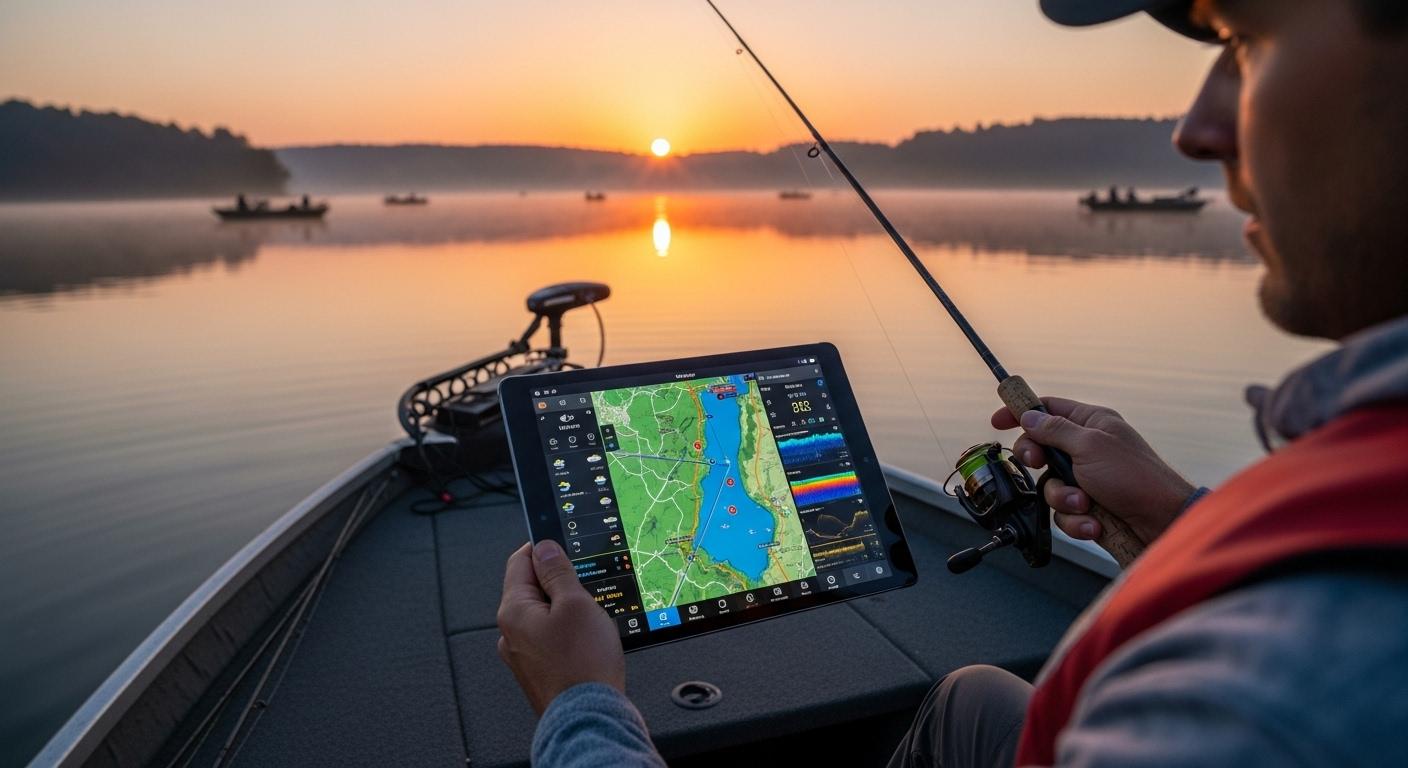
Transitioning from paper field forms to digital data collection eliminates transcription errors, accelerates data availability, and enables real-time quality checks. Modern fisheries software extends to mobile devices—tablets and smartphones—supporting field data entry with offline capability and automatic synchronization.
Mobile applications guide users through data collection protocols, ensuring all required fields are completed and presenting context-appropriate options. Form logic adapts based on previous responses—if a fish is recorded as dead, the application prompts for cause-of-death information. If alive, it requests release condition and location. This dynamic behavior prevents incomplete records and ensures consistency across observers.
Offline capability proves essential for fieldwork in areas without cellular coverage. Applications cache data locally, syncing with central databases when connectivity returns. This functionality eliminates the choice between real-time data entry requiring connectivity and paper forms requiring later transcription—combining immediate digital recording with operational flexibility.
Geographic positioning integration automatically captures sample locations with smartphone GPS, eliminating manual coordinate recording and associated transcription errors. Photo capture documents specimens, habitats, or field conditions, linking images to database records for verification and context. These integrated capabilities enrich datasets while streamlining field workflows.
Predictive Modeling and Scenario Analysis
Beyond managing historical data, advanced fisheries software supports forward-looking analyses informing management planning. Population projection models forecast future abundance under different harvest scenarios. Habitat suitability models predict species distributions under climate change. Bioeconomic models evaluate economic implications of regulatory alternatives.
These analytical capabilities transform fisheries management from reactive—responding to observed population changes—to proactive—anticipating consequences of management decisions before implementation. Software lowering technical barriers to predictive modeling enables broader application of these powerful decision-support tools.
Scenario comparison interfaces allow managers to explore options—comparing projected populations under different harvest rates, evaluating habitat restoration alternatives, or assessing climate adaptation strategies. Visual comparisons highlight tradeoffs, clarifying that higher harvest provides near-term economic benefit but risks long-term population decline, while conservative harvest sacrifices immediate return for sustainability.
Uncertainty quantification through simulation frameworks acknowledges that predictions contain uncertainty from data limitations, model assumptions, and environmental stochasticity. Rather than presenting single forecasts as certainties, probabilistic approaches communicate ranges of plausible outcomes, supporting risk-informed decision-making appropriate to management objectives and stakeholder risk tolerance.
Integration with Environmental and Oceanographic Data
Fish populations respond to environmental conditions—temperature, flow, ocean productivity, climate indices. Understanding these relationships requires integrating biological data with environmental information from diverse sources—weather stations, stream gauges, satellite oceanography, climate databases.
Modern fisheries platforms incorporate environmental data feeds, automatically retrieving relevant information and aligning it temporally and spatially with biological observations. Software might download daily stream temperatures from USGS gauges, match them to fish detection dates and locations, and analyze whether migration timing correlates with thermal conditions.
This environmental integration enables analyses impossible when biological and environmental data reside in separate systems. Researchers can test whether survival varies with ocean conditions, whether growth responds to stream temperature, or whether reproduction succeeds only during specific flow regimes. These insights inform management adaptations to environmental variability and climate change.
Cost-Effectiveness and Return on Investment
Implementing comprehensive fisheries software requires initial investment—licensing costs, hardware infrastructure, staff training, and data migration from legacy systems. However, the efficiency gains, analytical enhancements, and decision improvements often justify these costs within relatively short timeframes.
Labor savings from automated data processing, reduced transcription and validation time, and streamlined reporting accumulate rapidly. Programs spending weeks annually on data management tasks may reduce this to days or hours, freeing personnel for higher-value analytical and interpretive work. Over multi-year programs, these savings substantially offset software costs.
Improved decision quality from timely, comprehensive information may generate even greater value. Harvest regulations based on current population assessments rather than outdated information better achieve sustainability and economic objectives. Conservation actions informed by rigorous data analysis more effectively protect imperiled populations. These benefits, while harder to quantify than labor savings, often far exceed software investment costs.
Future Directions and Emerging Capabilities
Artificial intelligence and machine learning increasingly augment fisheries software capabilities. Image recognition algorithms identify fish species and estimate sizes from photos, potentially automating measurements currently requiring manual processing. Anomaly detection algorithms flag unusual data patterns meriting investigation—potential equipment malfunctions, data entry errors, or genuine biological phenomena. Predictive models trained on historical relationships forecast population responses to environmental conditions with improving accuracy.
Cloud computing enables analyses previously requiring specialized high-performance infrastructure. Computationally intensive population models, genetic analyses of large datasets, or spatial simulations across landscapes become accessible through web interfaces, democratizing sophisticated methods previously limited to well-resourced institutions.
The evolution of fisheries from simple data storage systems to comprehensive analytical platforms reflects broader digital transformation across scientific disciplines. As fisheries face mounting pressures from climate change, habitat alteration, and increasing demands on aquatic resources, technologies streamlining the path from data to decision become increasingly essential. Platforms that integrate information, automate analyses, facilitate collaboration, and support evidence-based management represent not merely conveniences but fundamental enablers of sustainable fisheries stewardship in an era of rapid environmental change and complex socioecological challenges.

 English
 Arabic
 Spanish
 Portuguese
 Deutsch
 Turkish
 Dutch
Dutch
 Italiano
 Russian
 Romaian
 Portuguese (Brazil)
 Greek
Greek