


Industrial Laser Cleaner: Revolutionizing Surface Cleaning and Precision Maintenance Across Industries
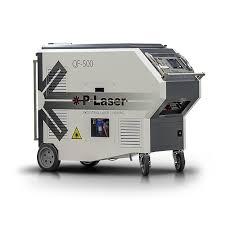
The industrial laser cleaner has emerged as a groundbreaking tool in modern manufacturing and maintenance, reshaping the way industries approach surface cleaning, material preparation, and equipment upkeep. Unlike conventional methods that rely on harsh chemicals, abrasive materials, or labor-intensive processes, the industrial laser cleaner harnesses advanced laser technology to deliver precise, efficient, and environmentally responsible cleaning solutions. This innovation has garnered attention from sectors ranging from automotive manufacturing to aerospace engineering, reflecting the versatile applications and transformative potential of laser cleaning systems.
At its core, the industrial laser cleaner operates by emitting high-energy laser pulses directed onto the surface of a material. The laser interacts with contaminants such as rust, paint, oil, or oxidation layers, causing them to vaporize or break down without damaging the underlying substrate. This non-contact cleaning process ensures that surfaces remain intact, avoiding scratches, corrosion, or structural compromise that traditional cleaning methods often cause. Industries that require meticulous maintenance standards, including electronics, aerospace, and precision machinery, have embraced this technology due to its ability to meet stringent surface preparation demands.
One of the defining features of the industrial laser cleaner is its adaptability to diverse materials and applications. Metals like steel, aluminum, and copper, as well as non-metallic surfaces such as ceramics and composites, can all be treated effectively. In heavy industries, this capability allows maintenance teams to remove corrosion and grime from machinery and pipelines without dismantling equipment or resorting to chemical solvents. Similarly, in automotive manufacturing, laser cleaning ensures that molds, dies, and production tools maintain optimal performance by eliminating residues that could compromise product quality.
The speed and efficiency of industrial laser cleaners have set new benchmarks in production environments. Traditional methods such as sandblasting, wire brushing, or chemical baths often require significant labor hours and can introduce environmental hazards through chemical waste or airborne particles. Industrial laser cleaners, on the other hand, provide a streamlined process that can be integrated into automated production lines. This not only reduces operational downtime but also increases throughput, allowing companies to meet tight production schedules without sacrificing surface integrity.
Maintenance and operational flexibility are critical factors that make the industrial laser cleaner an attractive investment. The technology allows operators to adjust parameters such as pulse duration, energy intensity, and scanning speed to suit specific cleaning tasks. This level of control ensures precision in both large-scale industrial applications and delicate operations, such as cleaning molds used in high-precision casting or removing oxidation from intricate electronic components. Furthermore, laser cleaners are often portable or modular, allowing them to be deployed across multiple sites or integrated into robotic systems for repetitive, high-volume cleaning tasks.
The environmental impact of industrial laser cleaners is another compelling reason for their adoption across industries. By eliminating the need for harsh chemical solvents, abrasive powders, or water-intensive cleaning techniques, laser cleaning significantly reduces waste generation and pollution. In manufacturing facilities that aim to meet sustainability goals, industrial laser cleaners align with eco-conscious initiatives while maintaining production efficiency. Additionally, the technology minimizes secondary waste management requirements, reducing the operational burden associated with disposing of hazardous residues generated by conventional cleaning methods.
In addition to cleaning and maintenance, the industrial laser cleaner plays a vital role in surface preparation and finishing processes. Industries that require coatings, adhesives, or protective films benefit from the laser cleaner’s ability to provide a consistent, contaminant-free surface. This ensures that paints, coatings, and bonding materials adhere effectively, enhancing the durability and performance of the final product. Precision applications, such as aerospace component assembly or electronic device manufacturing, rely heavily on such surface preparation to maintain strict quality standards.
Safety and operational control are integral to industrial laser cleaning systems. Unlike chemical cleaning agents, which can pose risks to operators and require extensive protective measures, laser cleaners focus energy precisely on the target surface. Many systems are equipped with shielding and automation features to prevent accidental exposure, ensuring that personnel can operate the equipment safely. Additionally, the reduction in chemical use contributes to a safer working environment, mitigating risks associated with toxic fumes, flammable liquids, or corrosive substances commonly used in traditional cleaning methods.
The technological sophistication of industrial laser cleaners continues to evolve, with modern systems incorporating advanced optics, real-time monitoring, and programmable automation. Such innovations enable precise targeting of contaminants, adaptive cleaning of irregular surfaces, and integration into intelligent manufacturing environments. Facilities implementing these systems can leverage data-driven cleaning schedules, predictive maintenance, and automated quality checks, further enhancing operational efficiency and reliability.
Industries that have adopted the industrial laser cleaner report improvements in both operational performance and product quality. For instance, the aerospace sector, which deals with critical components exposed to extreme environmental conditions, benefits from laser cleaning’s precision and consistency. Rust, scale, and oxidation are removed from engine parts, landing gear, and turbine components without compromising structural integrity. Similarly, the automotive industry employs laser cleaning to maintain molds, dies, and production machinery, ensuring consistent manufacturing quality while reducing manual labor. In electronics manufacturing, laser cleaning ensures micro-components are free of contaminants that could affect functionality, demonstrating the versatility of this technology across different scales and sectors.
The adoption of industrial laser cleaners also reflects broader trends in industrial automation and smart manufacturing. As factories become more connected and digitally integrated, tools like laser cleaners enable seamless incorporation into automated workflows. Robotic arms equipped with laser cleaning modules can perform repetitive tasks with high accuracy, reducing human intervention and improving overall consistency. This integration supports the broader goals of Industry 4.0, including operational efficiency, real-time monitoring, and predictive maintenance.
Operational cost considerations further highlight the industrial laser cleaner’s relevance. Although initial investment may be higher than traditional cleaning methods, the reduction in labor, chemicals, water consumption, and equipment wear contributes to long-term savings. Maintenance requirements for the laser cleaning system itself are minimal, and its lifespan often exceeds that of conventional cleaning machinery. Over time, the combination of efficiency, reduced downtime, and minimized material waste can result in a highly favorable return on investment, making it an appealing choice for manufacturers seeking both performance and cost-effectiveness.
Industrial laser cleaners continue to drive innovation across a wide range of industries. From heavy machinery maintenance and automotive production to aerospace component preparation and electronics manufacturing, the technology provides a reliable, precise, and sustainable cleaning solution. Its ability to address diverse surface challenges, integrate into automated workflows, and reduce environmental impact positions the industrial laser cleaner as a transformative tool in modern industrial operations. As industries increasingly prioritize efficiency, precision, and sustainability, the role of the industrial laser cleaner is poised to expand, shaping the future of industrial cleaning and maintenance practices.
In practical terms, industrial laser cleaners are used in scenarios ranging from removing paint and rust from metal surfaces to cleaning molds and dies, maintaining industrial equipment, and preparing surfaces for coatings or bonding. Their precision, adaptability, and non-invasive cleaning process enable manufacturers to maintain equipment performance, improve product quality, and reduce operational interruptions. Across industries, companies that implement laser cleaning solutions experience enhanced operational reliability, a reduction in chemical dependency, and improved surface integrity, making the industrial laser cleaner a central component of modern industrial workflows.
Overall, the industrial laser cleaner represents a fusion of advanced laser technology with practical industrial needs. Its ability to deliver precise, efficient, and environmentally responsible cleaning has positioned it as a critical tool across multiple sectors. As manufacturing processes evolve and industries continue to seek innovative solutions, the industrial laser cleaner is likely to remain a cornerstone technology, driving efficiency, sustainability, and precision in industrial operations.

 English
 Arabic
 French
 Spanish
 Portuguese
 Deutsch
 Turkish
 Italiano
 Russian
 Romaian
 Portuguese (Brazil)
 Greek
Greek