


What Are The Most Common Waste Materials Used In Construction?
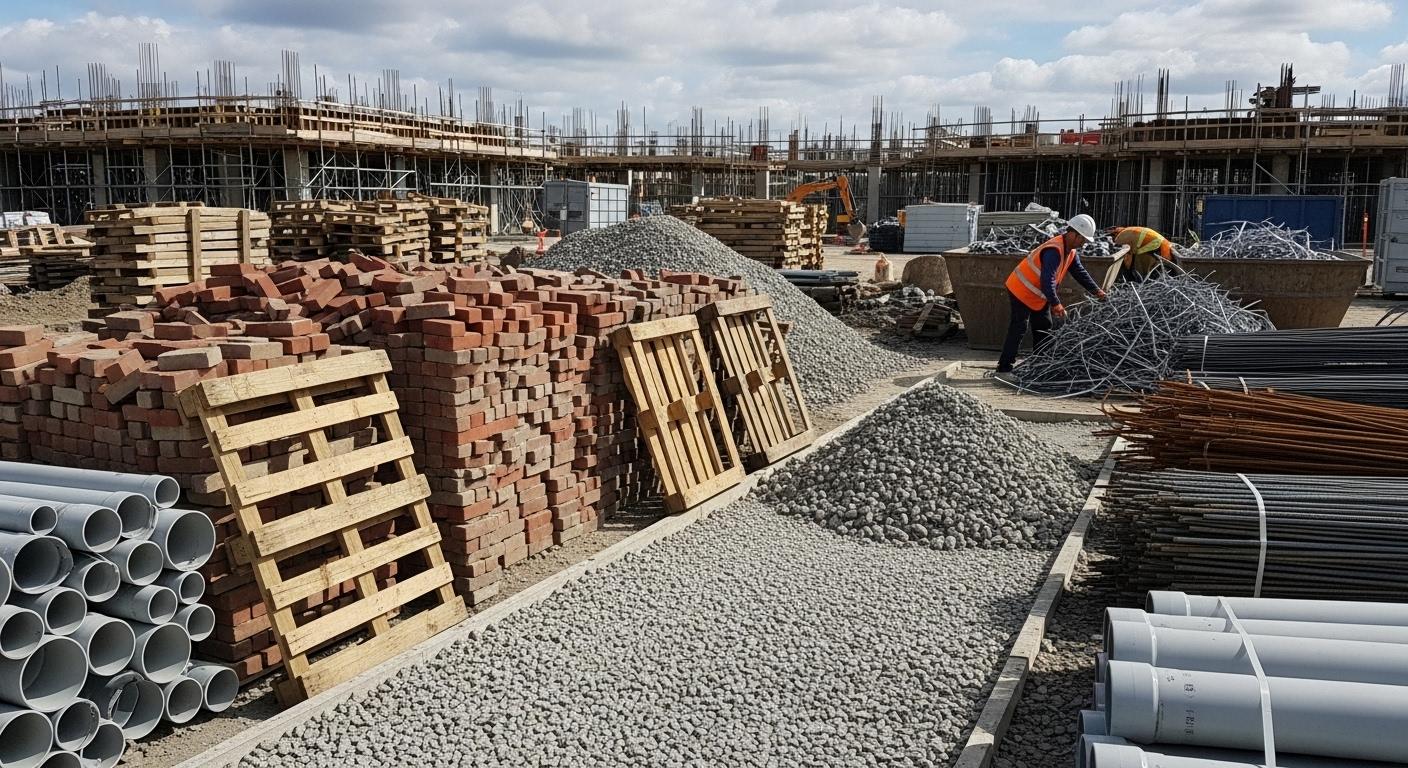
Construction in the U.S. is among the major sources of solid waste. It has been reported that construction-related activities generate millions of tons of debris annually. New residential buildings, as well as major commercial renovations, are among the activities contributing to the waste of materials used. These wastes result from a wide range of materials used for these activities. To comprehend the waste, it is necessary to know which of the materials used in the building industry produces the most waste. This knowledge will enable the contractors, developers, and homeowners to optimize project costs and, at the same time, implement sustainable practices.
The most frequent waste materials in the U.S. are those of concrete, wood, metals, drywall, asphalt, and finishing materials such as tiles and plaster. These materials, if not handled properly, will substantially increase the cost of disposal as well as the impact on the environment.
Understanding Construction Waste in the U.S.
What Makes Construction Waste a Challenge
Construction waste is not only a problem of logistics; however, it also poses environmental and economic challenges. The U.S. Environmental Protection Agency (EPA) indicates that construction and demolition (C&D) debris contributes approximately 40% of the total solid waste in the USA. The wrong use of materials such as concrete or gypsum not only leads to monetary loss but also causes damage to the environment.
Waste reduction heavily depends on proper planning and accurate material assessment. This is where commercial construction estimating plays a crucial role. By performing detailed quantity takeoffs and calculating the exact materials required for a project, these estimating services help prevent overordering and significantly reduce leftover materials. As a result, waste is not only minimized but also managed efficiently from the very beginning, supporting cost control and more sustainable construction practices.
The Main Waste Material Categories
Concrete and Masonry
Concrete accounts for most of the construction waste that happens in the U.S. It mainly comprises oeftover mix, broken slabs, and parts of demolished structures. Additionally, masonry materials such as bricks, blocks, and tiles are also major contributors to waste streams. Recently, it was found that just concrete can be responsible for almost half of the total amount of construction and demolition (C&D) debris by weight.
A significant portion of the reason is that people tend to order more than needed or mix their materials incorrectly. As an example, a concrete leftover may result from a miscalculation of a residential foundation project, and consequently, a new disposal cost will have to be paid unnecessarily.
|
Material Type |
Typical Waste Contribution |
Notes |
|
Concrete |
40-50% |
Includes slabs, leftover mix, demolition debris |
|
Bricks/Blocks |
10-15% |
Broken bricks, offcuts, unused blocks |
|
Tiles |
5-10% |
Broken or miscut ceramic tiles |
Proper recycling practices are becoming more common in U.S. urban areas, with concrete often crushed and reused as aggregate for new construction.
Wood and Timber
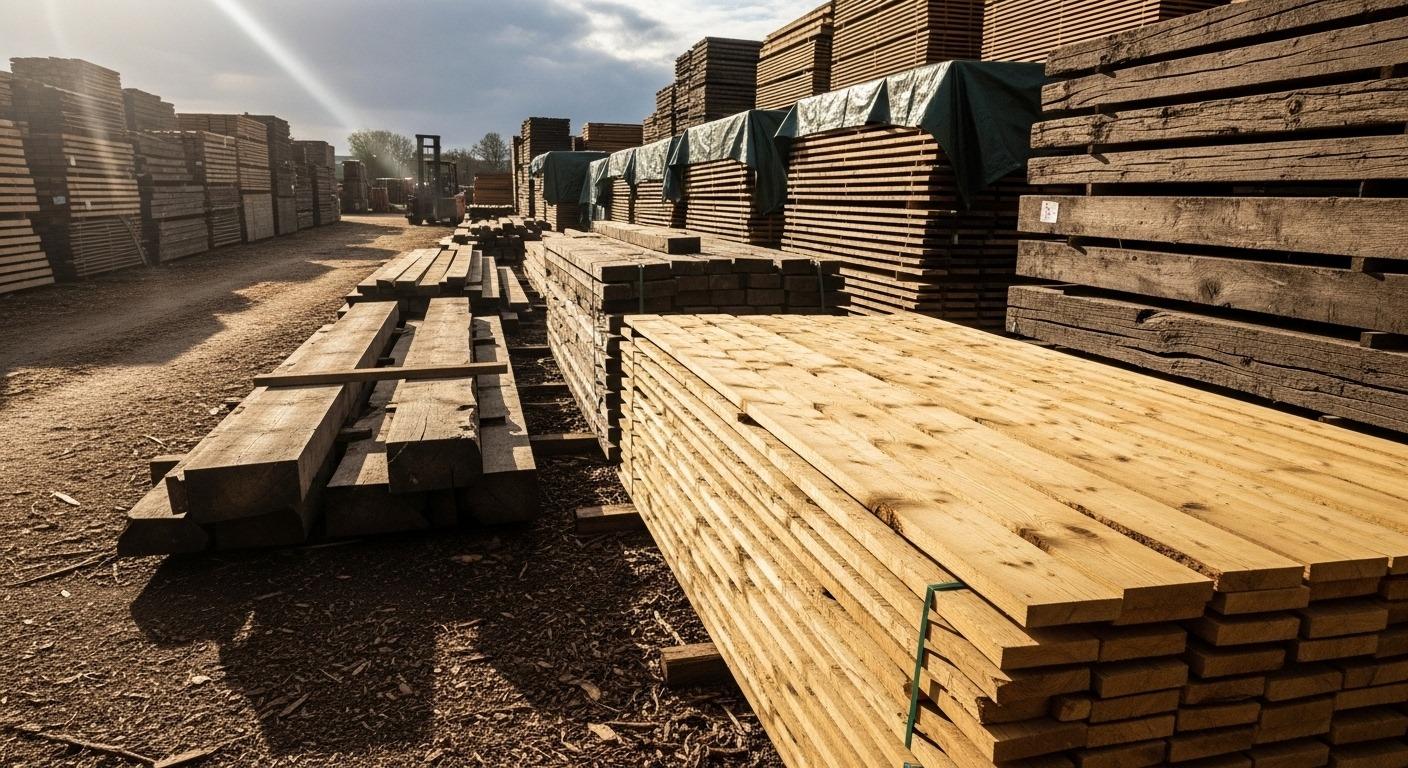
Wood waste is the second largest portion of construction debris. The list of wood waste comprises lumber offcuts, food packaging, pallets, and formwork wood. United States construction places are lumber waste-full, which in turn can be rehandled, chopped into wood pieces, or converted for other projects without causing environmental pollution.
Moreover, wood waste comprises one of the most straightforward recyclable materials, so it is both environmentally friendly and profitable for recycling in an appropriate way.
Drywall and Gypsum Board
Drywall, or gypsum board, is a widely used building material in the U.S. It forms the interior walls of both residential and commercial buildings. However, the waste of this product mainly comes from the cutting, trimming, and damaging parts during the process of the packaging, installation, and renovation of the drywall. Especially for renovation waste, it is very common that sections of drywall are exchanged for new ones, thus throwing away old ones.
Recycling wallboard materials remains a challenge in the U.S.; however, it is gradually becoming as common as concrete or metal recycling. With accurate drywall estimating, material takeoffs help determine precise quantities, reducing excess waste and improving the chances of effective recycling. Recovered gypsum can then be remanufactured into new boards or repurposed as agricultural fertilizer.
Metals: Steel, Aluminum, and Copper
Metals from construction projects consist of the following: steel beams, rebars, sheet metal, aluminum frames, and copper wires. Even though metals are not the heaviest wastes in terms of volume, they have a great economic value. Most metal wastes in the U.S. are recyclable, and scrap yards are always on the lookout for reusable steel and copper, which is the reason why there is a great potential for the proper sorting and collection of metal wastes.
Asphalt and Asphalt Shingles
Asphalt plays a significant role in road construction as well as in roofing. Waste generation is a result of road resurfacing, reroofing, and demolition. The U.S. is among the top countries in terms of asphalt recycling rates, and the majority of it is reused for new pavements and road repairs. Plastic shingles from residential projects are a major source of C&D waste and contribute heavily to them..
|
it.rial Type |
Typical Waste Contribution |
Recycling Notes |
|
Asphalt Pavement |
10-15% |
Recycled into new road surfaces |
|
Asphalt Shingles |
5-10% |
Can be reused in roofing or pavement mix |
Plastics, Packaging, and Glass
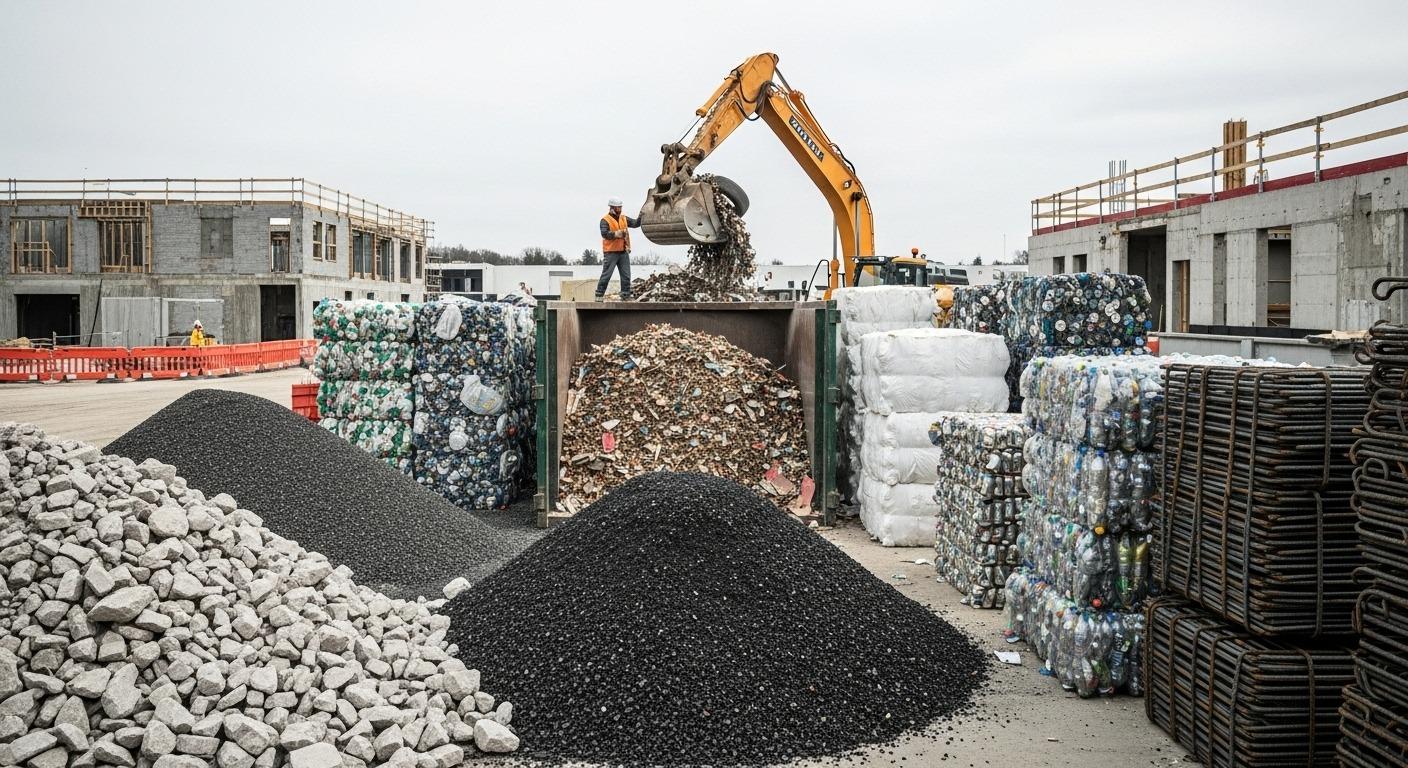
Plastics are everywhere; for example, PVC pipes, insulation materials, vapor barriers, and packaging, which are part of construction activities in the U.S. Increasingly, these products are being thrown into landfills either due to contamination or because no recycling option is available. The same goes for glass waste, which is mostly from windows and glazing systems and therefore needs to be handled properly. Glass can be recycled; however, it is limited in some areas that make prevention and reuse a priority.
H3: Secondary Waste Materials
The list of other waste materials is completed with soil, sand, and aggregates resulting from excavation or grading activities. At the same time, ceramic and porcelain tiles, insulation materials, and finishing debris are identified as local waste, thus mainly originating in renovation projects. The control of these materials in an efficient way requires not only a well-thought-out plan but also the leadership of an experienced construction manager.
Waste Management Practices in the U.S.
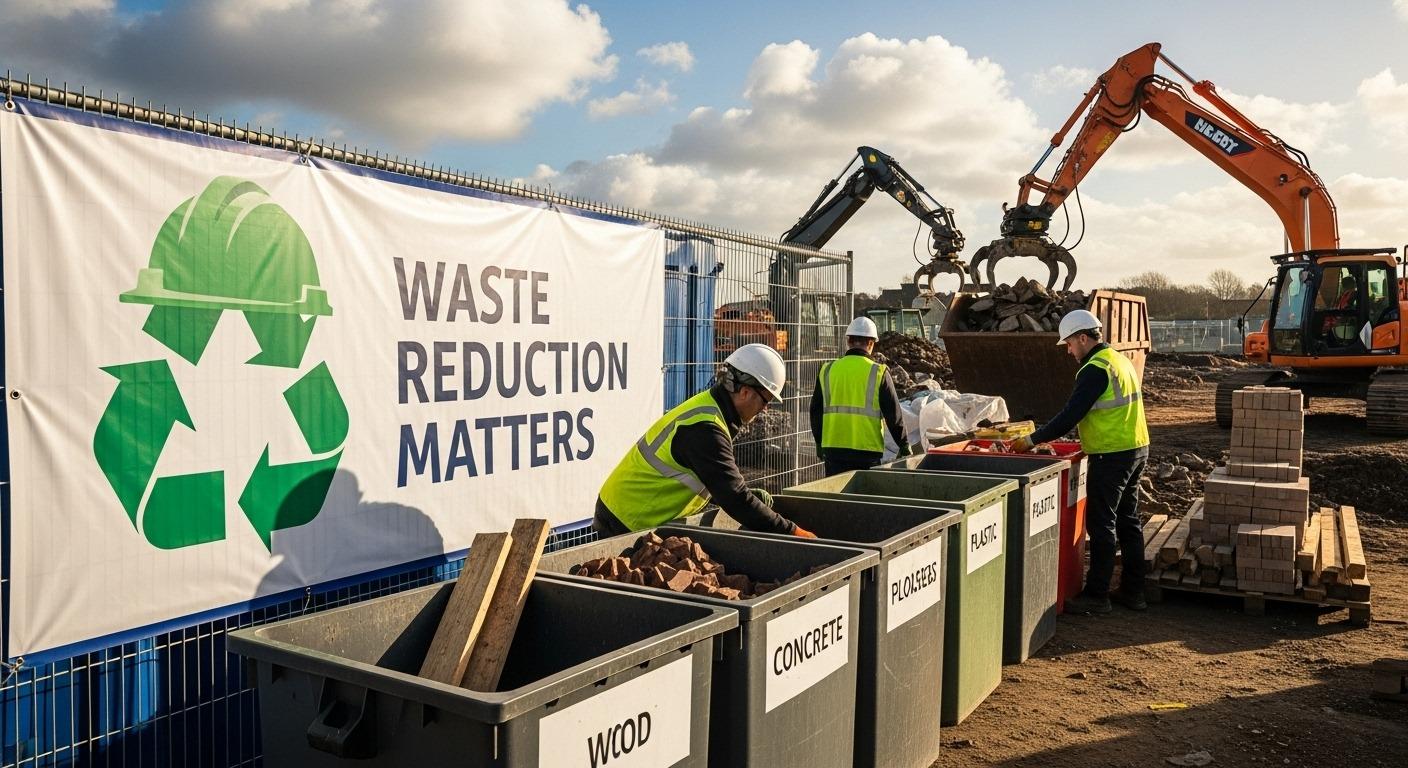
Good and well-thought-out waste management on construction sites in the United States involves a lot of different tactics. These include on-site sorting, recycling, and material reuse. Large-scale projects need to have formal waste diversion plans as mandated by many states, such as California and Massachusetts. These programs direct the contractors in a manner so that they reduce the use of landfills and, in the meantime, encourage the recycling of metals, concrete, wood, and other recyclables that may have been used.
One of the most important elements in the U.S. construction industry is expert estimating, as its involvement just can't be put with the success of the whole project. This kind of service gives the contractors the means to figure out the exact amounts of materials required; they are able to sift through the elements remaining for recycling or reuse and to come up with a plan in this direction. The waste can be remarkably limited by embedding expert estimating into project management, which is a very good money and environmental resource-saving method.
Why Waste Reduction Matters
Financial Benefits
The practice of waste reduction has a direct and positive impact on overall project budgets. Expenses that quickly inflate spending include disposal fees, over-purchasing of materials, and the labor required for waste handling. Accurate construction cost estimating, detailed quantity takeoffs, and proper planning help control material usage, support recycling efforts, and significantly reduce these avoidable expenditures.
Environmental Benefits
The issue of construction waste concerns the overall environment, which can be polluted in the long term. Some of them are landfill overcrowding, soil contamination, and greenhouse gas emissions. These measures, including recycling and reuse, are beneficial in conserving natural resources and combating the causes of pollution, which are in line with sustainability goals widely promoted in the U.S.
Legal and Regulatory Compliance
Many U.S. state governments are very strict and have rules and regulationsregarding waste management. If someone does not follow the rules, they will be liable for penalties, project delays, and even loss of reputation. Therefore, by implementing the right waste management practices, the contractor can ensure that they are on the safe side of the law and at the same time carry out an efficient, environmentally friendly construction.
Conclusion
Part of the building process is construction waste, which is unavoidable. However, its influence can be controlled properly in the U.S. By knowing which materials produce the most waste, concrete, wood, metals, drywall, asphalt, and finishing materials, contractors can double-check their planning, lower their disposal expenses, and support the environment.
Using methods such as estimating services, accurate material takeoffs, and recycling programs helps to keep projects environmentally friendly and money-saving. As a result of increased construction waste awareness, the implementation of such practices is becoming a norm for construction projects in the U.S. rather than a mere suggestion.
FAQs
1. What is the most common construction waste in the U.S.?
Concrete and masonry materials are the largest contributors by weight.
2. Which materials are easiest to recycle?
Metals, wood, asphalt, and concrete are highly recyclable in the U.S.
3. Why is drywall waste significant?
Drywall is cut to fit every project, and renovation projects often replace sections rather than repair them.
4. How can construction companies reduce waste?
Accurate material takeoff, on-site sorting, recycling partnerships, and using estimating services help minimize waste.
5. Do U.S. states have construction waste regulations?
Yes, states like California, Washington, and Massachusetts require waste diversion plans for large projects.

 English
 French
 Spanish
 Portuguese
 Deutsch
 Turkish
 Dutch
Dutch
 Italiano
 Russian
 Romaian
 Portuguese (Brazil)
 Greek
Greek