


Nante Industrial Plug Socket Connector: Design, Durability, and Best Practices
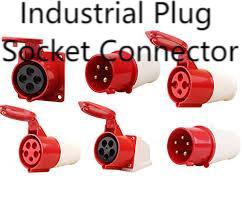
In busy production facilities and temporary power sites, a properly selected Industrial Plug Socket Connector can be the difference between smooth operation and costly downtime, and procurement teams should prioritize compatibility at the specification stage to avoid mismatches; similarly, choosing a rugged Industrial Plug Socket Connector early in the project lifecycle reduces retrofit work and improves safety margins for operators and maintenance crews. This article examines design choices, material science, environmental resilience, and practical field practices that influence performance and lifetime cost for heavy-duty power interconnections.
Standards, ratings, and why they matter
A connector’s stamped rating is a starting point, not the whole story. Voltage and continuous current ratings must match the intended circuit and include reasonable margins for temperature rise and duty cycle. Equally important are ingress protection ratings and any applicable industry standards such as IEC, UL, or regional certifications. Look at contact temperature rise at rated current and at short-duration overloads — some devices carry conservative thermal limits, and real-world installations often run closer to rated capacity. Ensure that any aftermarket adapters or customized assemblies are re-evaluated for their combined rating; mixing components can reduce safety margins.
Contact metallurgy and mechanical endurance
The choice of contact material and plating affects resistance, heat generation, and long-term reliability. Copper alloys with silver or nickel plating are common, providing good conductivity and wear resistance; for high-cycling applications, spring-tempered contacts offer stable retention force over many mating cycles. Pay attention to contact design — larger contact area reduces joule heating, while proper spring force ensures low resistance connections under vibration. Mechanical endurance, expressed in mating cycles, should align with expected use: portable equipment demands higher endurance than fixed installations.
Environmental resilience and sealing strategies
Outdoor or industrial environments expose connectors to moisture, dust, chemicals, and temperature swings. Effective sealing at the shell-to-cable interface and at mating faces preserves contact integrity. Choose cable glands rated for the cable diameter and environmental class, and consider integrated sealing systems for frequent connect/disconnect applications. Chemical exposure drives material selection: some polymers resist hydrocarbons and solvents, while certain metal finishes resist salt spray in coastal installations. For hygroscopic or condensation-prone environments, desiccant or breathable membrane solutions in enclosures can complement connector sealing.
Nante Product Families and Accessories
Selecting the right product family simplifies installation and maintenance. Modular series that share common shell sizes and accessories reduce spare part complexity and allow mixing power, signal, and data contacts in hybrid inserts. Accessories such as locking collars, dust caps, strain reliefs, and keyed shells add safety and make inventory management easier. When specifying, request accessory options that maintain the original IP rating and mechanical retention to avoid unplanned field modifications.
Installation, testing, and lifecycle planning
Good installation practice starts with proper cable selection: conductor size must match current rating, and insulation must tolerate ambient temperatures and any chemical exposure. Terminal preparation — strip lengths, conductor tinning when appropriate, and correct ferrule use — influences contact resistance and longevity. Commissioning tests should include continuity, insulation resistance, and torque verification for accessible terminals. Establish inspection intervals tailored to usage: high-cycle portable connections need more frequent checks than stationary hookups. Maintain a small stock of critical spares such as contacts and seals; quick replacement minimizes downtime and prevents destructive attempts at on-site repairs.
Troubleshooting and field repair techniques
Common field issues include increased contact resistance, intermittent connections, and seal degradation. Use a thermal camera or contact resistance meter to locate hotspots without disassembly. If corrosion is present, carefully assess whether cleaning is feasible or if full contact replacement is necessary — abrasive cleaning can remove plating and accelerate failure. For mechanical damage, replace the affected shell or insert rather than attempting jury-rigged repairs that compromise safety. Document repairs and update asset records so future teams understand the service history.
Selecting and maintaining industrial-grade power connectors is a lifecycle commitment that pays off through improved uptime and reduced emergency interventions. Align electrical, mechanical, and environmental requirements from the start, choose products with appropriate accessory ecosystems, and institute practical maintenance protocols to extend service life. For a concise industry overview and technical resources that clarify connector types and application guidance, see https://www.nante.com/news/industry-news/what-is-industrial-plug.html

 English
 Arabic
 French
 Spanish
 Deutsch
 Turkish
 Dutch
Dutch
 Italiano
 Russian
 Romaian
 Portuguese (Brazil)
 Greek
Greek