


Luvometinib: A New Exploration in Targeted Therapy, from MET-Abnormal Lung Cancer to Multi-Cancer Layout
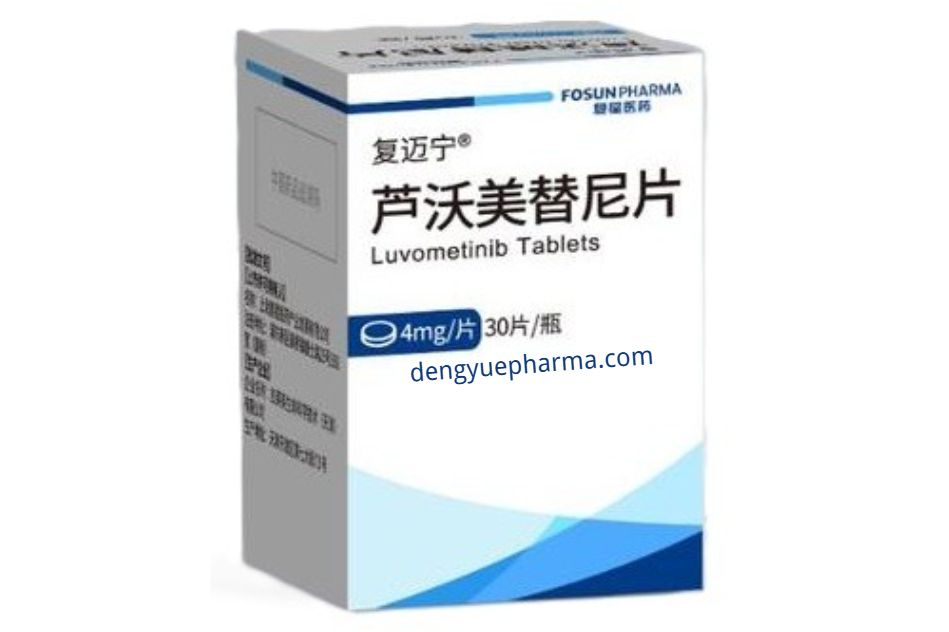
In the field of oncology targeted therapy, the development of precision drugs for specific gene abnormalities has always been a key direction for breaking through challenges and extending patient survival. DengyuePharma has discovered that Luvometinib (trade name: Fumaining®), an independently developed Class 1 innovative drug by Fosun Pharma, stands out in the treatment of MET gene abnormality-related tumors due to its unique mechanism of action and solid clinical data. This drug initially broke through with rare disease indications and is now gradually expanding to a broader range of solid tumors, particularly showing significant potential in the treatment of MET exon 14 skipping mutation non-small cell lung cancer, while research on other MET-abnormal solid tumors is also steadily advancing.
Core Mechanism: Precisely Blocking the MAPK Pathway to Inhibit Tumor Proliferation
The pharmacological core of Luvometinib lies in its highly selective inhibitory effect on MEK1/2 kinases. MEK, as a key node in the MAPK signaling pathway, has abnormal activation that is an important driving factor in the occurrence and development of various tumors—when genes such as MET and BRAF mutate, they downstream activate the MAPK pathway, leading to uncontrolled proliferation, invasion, and metastasis of tumor cells. Luvometinib achieves precise anti-tumor effects by potently and specifically inhibiting MEK1/2 activity, blocking abnormal pathway conduction, arresting tumor cells in the G0/G1 phase, and inducing apoptosis.
Compared to traditional chemotherapy drugs, Luvometinib has significant pharmacokinetic advantages: after oral administration of 8mg once daily in adults, the half-life can reach 30.4 hours, supporting a convenient dosing regimen; drug metabolism is mainly mediated by UGT enzymes, independent of the CYP450 enzyme system, with low risk of drug interactions, and food, age, and mild-to-moderate hepatic or renal impairment have no significant impact on its exposure, improving patient compliance. These characteristics lay the foundation for its wide clinical application.
Core Indication Progress: Focusing on MET Exon 14 Skipping Mutation Non-Small Cell Lung Cancer
MET gene abnormalities are recognized as important drivers in the lung cancer field, with MET exon 14 skipping mutations (METex14) occurring in about 3%-4% of non-small cell lung cancer (NSCLC) cases. These patients generally have poor prognosis and poor response to traditional chemotherapy, creating an urgent treatment need. Although Luvometinib has not yet been officially approved for this indication, based on its mechanism of action and clinical validation of similar drugs, the exploration of this drug in METex14 mutant NSCLC has clear scientific basis.
Similar MET inhibitors such as Tepotinib and Capmatinib have demonstrated significant efficacy in clinical trials for METex14 mutant NSCLC patients: Tepotinib in the Phase II VISION trial achieved an objective response rate (ORR) of 57% in treatment-naïve patients and 45% in previously treated patients, with nearly 40% of patients experiencing response durations exceeding 1 year. As a highly selective MEK inhibitor, Luvometinib can exert synergistic anti-tumor effects by blocking the downstream MAPK pathway activated by MET abnormalities, and its clinical research in this area is expected to provide new treatment options for patients. Currently, relevant clinical trials for METex14 mutant NSCLC are in the planning or advancement stage, aiming to verify its efficacy and safety.
Expanded Research Directions: Covering Multiple Types of MET-Abnormal Solid Tumors
In addition to METex14 skipping mutations, MET gene amplifications, fusions, and other abnormalities are also detected in various solid tumors such as gastric cancer, glioma, and liver cancer, where these patients similarly lack targeted treatment options. Leveraging its precise blocking capability on the MAPK pathway, Luvometinib has initiated clinical explorations for these expanded indications, with particularly notable progress in the glioma field.
In the glioma field, Luvometinib has entered Phase II and III clinical trials, focusing on pediatric low-grade gliomas (LGG). Pediatric LGG often involves abnormal activation of the MAPK pathway (such as KIAA1549-BRAF fusions, BRAF V600E mutations), and MET amplification or fusion as a synergistic abnormality may further drive tumor progression. In a Phase II study targeting relapsed or progressive pediatric low-grade gliomas, the Luvometinib treatment group achieved an ORR of 59.1% and a disease control rate (DCR) of up to 100%, with all enrolled children benefiting from the treatment, showing rapid onset and controllable safety. Currently, a Phase III clinical trial is comparing Luvometinib with traditional chemotherapy regimens in these patients, planning to enroll 102 patients, with the primary endpoint being progression-free survival (PFS). If successful, it will provide a new targeted treatment option for pediatric LGG patients.
In the gastric cancer field, MET amplification or fusion is one of the important causes of malignant tumor progression and drug resistance, with an incidence of about 5%-10%. Currently, research on Luvometinib for MET-abnormal gastric cancer is still in the early exploration stage, mainly verifying its effectiveness through preclinical studies and small-scale clinical trials: in vitro experiments show that Luvometinib can dose-dependently inhibit ERK phosphorylation in MET-amplified gastric cancer cell lines, significantly suppressing tumor cell proliferation; on the clinical level, ongoing early clinical trials aim to evaluate its efficacy as monotherapy or in combination with MET inhibitors for MET-abnormal gastric cancer, with preliminary data indicating certain tumor control capabilities and tolerable adverse reactions.
In addition, Luvometinib is also conducting clinical trials in extracranial arteriovenous malformations, adult type I neurofibromatosis, and other diseases, with several indications included in the National Medical Products Administration's Breakthrough Therapy Designation program, highlighting its therapeutic potential in rare diseases and refractory tumors.
Safety Profile: Good Tolerability with Controllable Adverse Reactions
Based on data from multiple clinical trials, Luvometinib has a clear safety profile, with overall good tolerability, mainly mild-to-moderate adverse reactions, and no reports of serious fatal adverse events. In adult patients, the most common drug-related adverse events (incidence ≥20%) include elevated blood creatine phosphokinase, rash, folliculitis, oral ulcers, diarrhea, etc., with a low incidence of ≥Grade 3 adverse reactions, mainly folliculitis (13.2%), elevated blood creatine phosphokinase (5.8%), etc., most of which can be alleviated through dose adjustment or symptomatic treatment, with no patients permanently discontinuing due to adverse reactions.
In pediatric patients, common adverse reactions include elevated blood lactate dehydrogenase, elevated blood creatine phosphokinase, paronychia, etc., with an incidence of ≥Grade 3 adverse reactions less than 3%, and no observed left ventricular ejection fraction (LVEF) reduction or other common cardiovascular toxicities seen with similar drugs, demonstrating significant safety advantages. This favorable safety profile provides assurance for its long-term treatment and multi-cancer explorations.
Summary and Outlook
As a domestically developed highly selective MEK inhibitor, Luvometinib starts from rare disease indications and gradually expands to MET abnormality-related solid tumors, showing broad clinical application prospects. Its exploration in MET exon 14 skipping mutation non-small cell lung cancer is expected to fill the treatment gap in this area; research in MET amplification/fusion solid tumors such as gliomas and gastric cancer also brings new hope to these refractory tumor patients.
With the disclosure of more clinical trial data, Luvometinib's indication landscape will further expand, potentially becoming a core targeted drug covering multiple cancer types and gene abnormalities. At the same time, as a representative of domestic innovative drugs, it not only provides more accessible treatment options for domestic patients but also demonstrates the R&D strength of Chinese pharmaceutical companies in oncology targeted therapy. In the future, combined with combination therapy strategies (such as with MET inhibitors or immune checkpoint inhibitors), Luvometinib is expected to further enhance efficacy, break through tumor resistance dilemmas, and inject new vitality into precision oncology treatment.

 English
 Arabic
 French
 Spanish
 Portuguese
 Deutsch
 Turkish
 Dutch
Dutch
 Italiano
 Russian
 Romaian
 Greek
Greek