


Nante Industrial surface mounted socket: Installation Best Practices
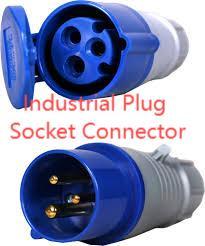
Proper outdoor and industrial power planning requires attention to detail — when engineers specify a Industrial surface mounted socket early in project design, they reduce compatibility issues, and when installers choose a Industrial surface mounted socket with the right ingress rating and hardware, they minimize rework and enhance long-term reliability. This guide walks through the selection, installation, and maintenance considerations that keep surface-mounted power units performing safely in demanding environments.
Assessing site needs and electrical requirements
Begin with a thorough site survey. Record expected voltages, current demands, phase configuration, and any transient or inrush conditions that might stress connectors. Environmental factors—such as exposure to rain, direct sunlight, washdown procedures, salt spray near coasts, or chemical atmospheres—determine the protection level and material choices. Also account for mechanical stressors: high-traffic zones, potential impact, or vibration that can loosen fittings over time. Capturing these variables early simplifies component selection and ensures the chosen unit fits the operational profile.
Materials, finishes, and mechanical integrity
Material choice dictates how a unit withstands long-term exposure. UV-stabilized thermoplastics resist cracking and discoloration, while die-cast aluminum offers strength and thermal conduction. Stainless steel excels in corrosive settings where chemical or salt exposure is significant. Pay careful attention to fasteners, hinges, and mounting plates—stainless or properly plated hardware prevents galvanic corrosion and preserves seals. Reinforced mounting bosses and vibration-damping supports help maintain alignment and reduce fatigue on connections, especially where machinery or vehicles create ongoing movement.
Sealing and cable entries (Nante solutions)
Sealing is a whole-system concern. Use cable glands rated for the enclosure’s protection class and provide proper strain relief to prevent cable movement from compromising seals. Orient entries so gravity assists drainage rather than channels water toward seams; sloped tops and drip edges deter pooling. Nante’s accessory options include pre-sized gland plates and captive fasteners that simplify installation and preserve gasket integrity. For condensation-prone sites, consider breathable vents or desiccant chambers that allow pressure equalization without letting moisture in.
Installation best practices and mounting techniques
How a unit is mounted affects performance. Secure the assembly to a rigid, vibration-free surface and allow clearance for wiring access and door swing. Follow manufacturer torque specifications for terminal lugs and glands—both over- and under-torquing can create problems. Route cables with appropriate bend radii, and use protective conduits where abrasion or impact is possible. If the location is exposed to public access, add lockable covers and tamper-resistant fixings. During commissioning, verify seal compression and complete a basic ingress test if practical to confirm field protection.
Thermal management and component layout
Heat accelerates aging for electrical parts. Plan the internal layout so heat-generating components—transformers, contactors, and large breakers—have conductive pathways or ventilation to shed heat. Passive measures such as reflective external finishes and conductive backplates help reduce internal temperature rise. For high-load scenarios, add filtered fans, heat exchangers, or thermostatically controlled ventilation. Separating power circuits from sensitive control electronics limits thermal interaction and simplifies targeted cooling strategies.
Commissioning, documentation, and testing
A methodical commissioning process prevents surprises. Perform insulation resistance and continuity checks, verify phase rotation, and measure contact resistance on high-current terminations. For critical loads, conduct thermal imaging under typical operation to detect hot spots caused by loose connections. Record torque values, component serials, and test outcomes in an as-built dossier. Photographs of gland installations and wiring runs save time during future troubleshooting and help validate warranty claims if defects appear.
Maintenance scheduling and spare-part planning
Set a predictable inspection cadence based on local exposure and duty cycle. Check gaskets for compression set, inspect fasteners for corrosion, and clear drainage channels seasonally. Replace consumables like desiccants and filters before failure, and keep a compact spare kit—gaskets, common gland sizes, captive screws—on site. Trend logs of moisture incidents or thermal anomalies to spot systemic issues. In remote installations, plan for regional stocking of critical spares to reduce downtime.
Accessories and retrofit options
Value-added accessories streamline deployment: prewired subpanels reduce onsite wiring, internal DIN rails support modular components, and surge protection modules shield sensitive equipment. Retrofit adapters allow newer units to replace legacy boxes without major structural changes. For projects with multiple identical sites, standardized configurations simplify inventory and training for maintenance crews.
Choosing the right surface-mounted power solution combines careful specification, solid installation practices, and a sensible maintenance plan. Prioritize ingress protection, robust materials, and thermal design to ensure reliable operation over years of service. For product specifications, compatible accessories, and datasheets, visit https://www.nante.com/product/

 English
 Arabic
 French
 Spanish
 Portuguese
 Deutsch
 Turkish
 Dutch
Dutch
 Russian
 Romaian
 Portuguese (Brazil)
 Greek
Greek