


Why Does Magnesium Strengthen ER5183 Aluminum Welds?
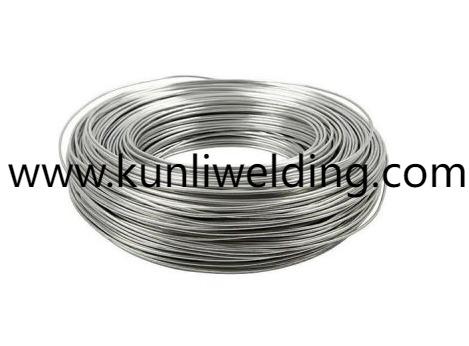
Alloy chemistry fundamentally determines mechanical properties in aluminum welding filler materials, with specific elemental additions serving distinct metallurgical purposes affecting weld metal strength, ductility, and corrosion behavior. Understanding how individual alloying elements contribute to final weld properties enables informed material selection matching application requirements rather than arbitrary choices based on availability or familiarity. When specifying Aluminum Welding Wire ER5183 , recognizing why magnesium content specifically influences strength characteristics helps engineers and fabricators appreciate this filler material's suitability for structural applications demanding enhanced mechanical performance beyond what standard aluminum alloys provide.
Magnesium functions as a solid solution strengthening element in aluminum alloys, dispersing atomically throughout the aluminum matrix and creating resistance to dislocation movement during plastic deformation. This atomic-level interference mechanism increases material strength without requiring heat treatment or precipitation hardening processes. The magnesium percentage in filler wire chemistry directly correlates with weld metal strength, with higher concentrations producing stronger welds suitable for load-bearing structural applications. This strengthening mechanism operates immediately upon solidification, creating as-welded properties meeting structural requirements without post-weld heat treatment that many fabrication operations find impractical or economically prohibitive.
Weld joint efficiency in structural applications depends on weld metal strength approaching or matching base metal capabilities. When filler material produces welds significantly weaker than surrounding base metal, joints become weak links limiting overall structural capacity regardless of base metal strength. Magnesium-bearing filler materials create weld metal strength levels compatible with common structural aluminum alloys, enabling joints that function as integral structural elements rather than just connecting weaker zones between stronger base metal sections. This strength compatibility proves essential in applications where weld joints experience direct loading or participate in load transfer paths throughout structure.
Ductility retention alongside strength increases represents a critical magnesium advantage over some strengthening mechanisms that sacrifice ductility for strength gains. Aluminum structures often experience impact loads, cyclic stresses, or occasional overload conditions where ductility prevents brittle failure modes. Magnesium additions maintain adequate ductility enabling energy absorption and plastic deformation before fracture, important safety characteristics in structural applications. This balance between strength and ductility allows weld joints to accommodate stress concentrations, minor overloads, and dynamic loading without catastrophic brittle failures that could occur with high-strength but low-ductility materials.
Strain hardening characteristics of magnesium-bearing aluminum affect material behavior during fabrication and service. Unlike precipitation-hardened alloys requiring specific thermal treatments, solid solution strengthened materials respond to mechanical working through increased dislocation density raising strength levels. This work hardening enables additional strengthening during cold forming operations while providing reserve strength capacity if structures experience plastic deformation during service. The strain hardening behavior contributes to structural toughness beyond simple tensile strength values, important for impact resistance and damage tolerance in practical applications.
Temperature stability of magnesium solid solution strengthening influences material performance in elevated temperature service. Unlike some strengthening mechanisms that degrade rapidly with temperature increases, solid solution strengthening maintains effectiveness across reasonable temperature ranges encountered in many applications. Equipment experiencing moderate elevated temperatures during operation benefits from this thermal stability, maintaining adequate strength throughout temperature cycling rather than suffering dramatic property losses with modest temperature increases above ambient conditions.
Aluminum Welding Wire ER5183 contains magnesium percentages specifically balanced to provide structural strength while maintaining weldability and avoiding excessive hot cracking susceptibility. Too little magnesium produces inadequate strength for structural applications, while excessive concentrations increase cracking tendencies during solidification. The formulation represents optimized compromise achieving structural strength requirements while preserving crack resistance necessary for sound weld fabrication across typical aluminum alloys. This balance reflects extensive metallurgical development and field experience informing current specification requirements.
Corrosion resistance benefits from magnesium additions through multiple mechanisms affecting alloy electrochemical behavior. Magnesium modifies the aluminum oxide film forming naturally on surfaces, enhancing protection against atmospheric and marine corrosion. Structural applications often face environmental exposure where corrosion resistance contributes to durability and service life. The combination of strength and corrosion resistance makes magnesium-bearing filler materials particularly suitable for marine structures, transportation equipment, and outdoor installations where both mechanical and environmental performance prove critical for long-term success.
Fatigue resistance in cyclically loaded structures benefits from magnesium's influence on crack initiation and propagation resistance. Structures experiencing repeated loading cycles from vibration, thermal expansion, or operational stresses require weld joints resisting fatigue crack development throughout design life. The microstructural characteristics resulting from magnesium solid solution strengthening contribute to fatigue performance supporting structural durability under cyclic loading conditions common in transportation, machinery, and dynamic structures.
Weld profile geometry influences stress distributions affecting how weld metal strength translates into joint performance. Even high-strength filler materials cannot overcome poor weld geometry creating stress concentrations at weld toes or inadequate throat dimensions in fillet welds. Proper welding procedure development ensures weld geometry complements material strength, creating joints where metallurgical strength capabilities receive full utilization rather than geometric stress concentrations causing premature failure despite adequate material strength.
Aluminum Welding Wire ER5183 demonstrates strength advantages in applications requiring reliable load-bearing capacity from welded joints. Marine structures, aerospace components, transportation equipment, and structural assemblies benefit from weld metal strength approaching base metal capabilities. Understanding magnesium's strengthening mechanism helps appreciate why this alloy receives specification in demanding structural applications where joint strength directly affects structural integrity and safety throughout service life.
Testing protocols verify that magnesium content produces intended strength levels in actual weld deposits. Tensile testing, hardness measurements, and sometimes impact testing document mechanical properties achieved with specific welding parameters and base metal combinations. Procedure qualification records demonstrate that production welding will produce adequate strength meeting design requirements. This testing confirms metallurgical expectations translate into practical performance under actual fabrication conditions.
Base metal compatibility considerations ensure magnesium-bearing filler materials work successfully with intended aluminum alloys. While magnesium provides strengthening, excessive mismatch between filler and base metal chemistry can create problems. Compatibility charts and welding procedure specifications guide appropriate filler selection for specific base metal combinations, ensuring magnesium content benefits strength without introducing metallurgical incompatibilities creating other problems.
The significance of magnesium content in this chromium and magnesium-bearing filler extends beyond simple strength numbers to encompass balanced properties supporting structural applications. Strength combined with ductility, corrosion resistance, and crack resistance creates comprehensive performance profile suited for demanding fabrication scenarios where single-property optimization proves insufficient. Understanding these interconnected property relationships helps fabricators appreciate why specific filler formulations receive preference in structural aluminum welding applications. Technical information about alloy chemistry and mechanical properties is available at https://www.kunliwelding.com/ .

 English
 Arabic
 French
 Spanish
 Portuguese
 Turkish
 Dutch
Dutch
 Italiano
 Russian
 Romaian
 Portuguese (Brazil)
 Greek
Greek