


Fiber Optic Cable Industry Scales Manufacturing For Digital Infrastructure And Resilience
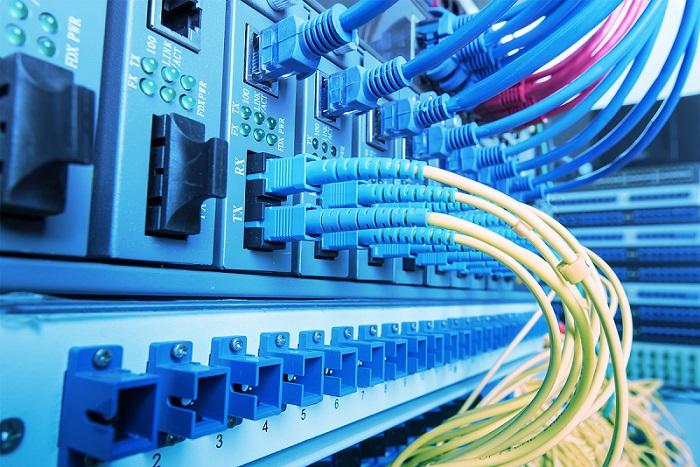
The Fiber Optic Cable Industry is scaling to support long-term investment in broadband, 5G, and cloud connectivity. As data traffic continues to rise, fiber becomes the physical foundation for transport networks, linking homes, cell sites, enterprises, and data centers. The industry spans glass preform manufacturing, fiber drawing, cable production, and supporting components such as closures, connectors, and splitters. It also depends on contractor ecosystems that install, splice, and test fiber routes. Industry priorities include increasing manufacturing capacity, improving product consistency, and reducing deployment complexity. High-density cable designs and improved fibers help maximize limited duct space and reduce installation risk. The industry also responds to resilience needs, developing rugged cables for harsh environments and supporting route diversity designs. As fiber becomes strategic national infrastructure, the industry faces pressure to deliver at scale with high quality and predictable lead times.
The industry’s competitive dynamics reflect both technology and execution. Large manufacturers benefit from economies of scale and global logistics, while regional producers compete through proximity, local content compliance, and fast delivery. OEM partnerships with telecom operators and hyperscalers influence product standards and volume commitments. Industry investment is also shaped by supply chain considerations; preform capacity is a critical upstream constraint, and vertical integration can improve stability. The industry is also innovating in installation efficiency, supporting ribbon fiber, microduct systems, and pre-terminated solutions that reduce labor requirements. Skills availability is a persistent challenge, driving demand for training programs and simplified deployment methods. In many markets, permitting and civil works are the main bottlenecks, so the industry collaborates with governments and utilities to promote “dig once” policies and shared infrastructure. These efforts can accelerate deployment while reducing overall construction disruption and cost.
Sustainability and lifecycle management are growing themes in the industry. Fiber networks are energy-efficient compared to copper, but manufacturing and construction still have environmental impacts. Some producers explore lower-impact materials, improved packaging, and recycling initiatives for cable reels and components. The industry also supports longer device lifecycles through better durability and standardized repair practices. In subsea cable segments, environmental and geopolitical considerations shape route planning and investment. Security and resilience concerns also influence industry focus, with operators demanding better physical protection, accurate mapping, and faster fault restoration capabilities. The industry increasingly pairs cable products with management solutions, including documentation platforms and sensing technologies that help detect and locate faults. As critical infrastructure depends on connectivity, service continuity becomes central, raising expectations for quality, support, and rapid response logistics across suppliers and contractors.
Looking ahead, the fiber optic cable industry will remain essential as wireless and wired networks converge around fiber backbones. 5G and future 6G architectures require dense fiber connectivity, and data centers will continue expanding high-capacity interconnects. Industry growth will also come from utilities, transportation, and industrial automation networks. The sector may see consolidation as companies seek scale, vertical integration, and broader component portfolios. However, niche players will remain important for specialized products such as armored industrial cables or subsea systems. Success in the industry will depend on reliable manufacturing, robust quality assurance, and support for faster deployment through installation-friendly designs. For network owners, partnering with suppliers that provide technical support, documentation, and predictable delivery will reduce risk. The industry’s long-term trajectory is anchored in durable demand for scalable, resilient connectivity—making fiber a cornerstone of modern digital infrastructure.
Top Trending Reports:

 English
 Arabic
 French
 Spanish
 Deutsch
 Turkish
 Dutch
Dutch
 Italiano
 Russian
 Romaian
 Portuguese (Brazil)
 Greek
Greek