


Can Shielding Gas Choice Affect Aluminum Productivity?
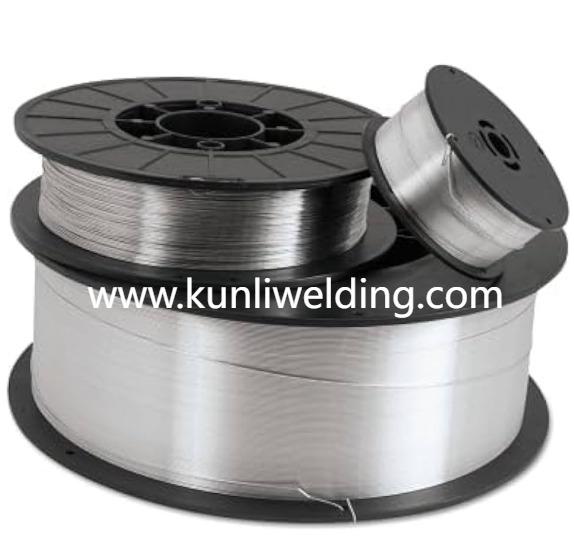
Welding aluminum requires careful attention to multiple process variables that interact to produce sound joints with acceptable mechanical properties and visual appearance. Among these critical factors, shielding gas selection profoundly influences arc characteristics, penetration profiles, weld metal cleanliness, and overall process stability in ways that directly affect fabrication outcomes. Aluminum Welding Wire ER5183 responds distinctively to different shielding gas atmospheres, making an understanding of gas options and their performance implications essential for optimizing welding results across varied applications, material thicknesses, and welding positions encountered throughout aluminum fabrication operations.
Pure argon remains the foundational shielding gas for aluminum welding across both TIG and MIG processes, providing stable arc behavior and adequate atmospheric protection for many applications. Its inert chemical nature prevents reactions with molten aluminum while its physical properties create a focused arc column and protective gas blanket over the weld pool. The arc voltage characteristics with pure argon produce relatively narrow, deep penetration patterns suitable for thinner materials and situations where excessive heat input could cause distortion or burn through. Automated welding systems frequently employ pure argon because its predictable behavior simplifies programming and maintains consistent results across production runs. Cost effectiveness represents another advantage since pure argon typically costs less than gas mixtures containing helium or other additives.
Helium additions to argon create blended atmospheres that significantly alter thermal characteristics and arc behavior compared to pure argon alone. Adding helium increases arc voltage and heat input, generating hotter, more fluid weld pools with wider, shallower penetration profiles. These thermal effects prove advantageous when welding thicker aluminum sections requiring substantial heat input for complete joint penetration without resorting to excessively slow travel speeds that reduce productivity. The broader heat distribution helium provides also benefits out of position welding where puddle control becomes more challenging and concentrated heat patterns from pure argon create difficulties. Various argon helium ratios enable fine tuning thermal characteristics to match specific joint configurations, material thicknesses, and welding position requirements.
Travel speed optimization represents one practical benefit of helium enriched mixtures because increased heat input enables faster torch movement while maintaining adequate fusion throughout the joint. This speed advantage improves productivity in production environments where cycle time directly impacts manufacturing costs and throughput capabilities. Automated and robotic welding systems particularly benefit from the productivity gains faster travel speeds provide, maximizing equipment utilization rates and reducing per unit fabrication costs. However, the cost differential between pure argon and helium blends requires economic analysis determining whether productivity gains justify increased shielding gas expenses for particular applications and production volumes.
Material thickness considerations provide practical guidance for shielding gas selection as joint dimensions change throughout fabrication operations. Thin gauge materials risk burn through with excessive heat input, favoring pure argon or argon rich mixtures that provide controlled energy delivery without overwhelming thin sections. Intermediate thickness ranges may benefit from moderate helium additions improving puddle fluidity and enabling reasonable travel speeds without excessive heat concentration. Heavy sections often demand substantial helium content generating the thermal energy required for complete joint penetration without resorting to impractically slow welding speeds that enlarge heat affected zones and increase distortion.
Welding position influences how shielding gas density and arc characteristics interact with gravity to affect puddle control and gas coverage effectiveness. Overhead and vertical applications typically favor argon rich mixtures because argon's greater density compared to air provides superior shielding coverage when welding against gravity. The focused arc column that pure argon produces also helps support the weld pool in out of position work where gravity constantly works against the welder. Flat and horizontal positions tolerate helium additions more readily since gravity assists rather than opposes puddle management in these orientations.
Process type compatibility varies between TIG and MIG applications, influencing appropriate gas selection for each welding method. AC TIG aluminum welding typically uses pure argon because the alternating current provides adequate oxide cleaning action without requiring helium's additional heat input for surface preparation. The balanced heat input pure argon delivers proves sufficient for most TIG applications across varied aluminum alloys and thicknesses. MIG processes more commonly employ argon helium blends, particularly for thicker materials where the continuous wire feed and higher deposition rates benefit from enhanced heat input that helium additions provide. Pulsed MIG applications sometimes use pure argon because the pulsing action provides controlled heat input that helium would otherwise supply through continuous thermal enhancement.
Gas purity standards affect weld quality regardless of composition choice because moisture contamination, oxygen content, and hydrocarbon residues compromise shielding effectiveness. These impurities promote porosity formation, oxide inclusions, and weld metal embrittlement that undermine mechanical properties and structural integrity. High purity gases from reputable suppliers combined with clean, leak free delivery systems maintain the protective atmosphere quality that aluminum welding demands. Regular system maintenance including purging residual moisture and inspecting connections prevents contamination that degrades shielding performance despite using appropriate gas compositions.
Flow rate optimization balances adequate coverage against turbulent flow patterns that draw atmospheric contamination into the shielded zone. Insufficient flow exposes molten aluminum to oxygen and nitrogen causing oxide formation and nitride inclusions. Excessive flow creates turbulence disrupting the laminar gas blanket and actually reducing shielding effectiveness while wasting gas. Gas lens diffusers improve flow stability, providing more uniform coverage at lower flow rates compared to standard nozzles. Adjusting flow rates based on nozzle size, welding position, and environmental conditions optimizes protection while controlling consumable costs.
Environmental conditions including drafts, ventilation systems, and outdoor exposure affect shielding gas requirements because air movement disrupts gas coverage requiring higher flow rates or protective measures maintaining stable atmospheres around weld zones. Indoor welding in controlled environments permits using lower flow rates, while field welding or drafty conditions demand increased flow or physical barriers protecting weld areas from air currents.
Understanding these gas selection principles enables systematic optimization of welding processes matching specific application requirements rather than defaulting to arbitrary gas choices based on limited experience or outdated preferences. Comprehensive shielding gas recommendations and quality aluminum welding materials are available at https://www.kunliwelding.com/ supporting fabrication quality improvement across diverse aluminum welding applications.

 English
 Arabic
 French
 Spanish
 Portuguese
 Deutsch
 Turkish
 Italiano
 Russian
 Romaian
 Portuguese (Brazil)
 Greek
Greek