


Understanding the Serial to Ethernet Adapter: Bridging Legacy Devices and Modern Networks
Introduction:
In today’s fast-paced digital environment, connecting older equipment to modern networks can be a challenge. Many industrial machines, point-of-sale systems, and legacy devices still rely on serial communication ports, while modern networks increasingly operate over Ethernet and IP protocols. This is where a serial to ethernet adapter becomes invaluable, providing a seamless bridge between old and new technologies.
What Is a Serial to Ethernet Adapter?
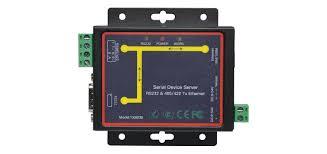
A serial to ethernet adapter is a device that converts serial data—usually transmitted via RS-232, RS-422, or RS-485 ports—into Ethernet-compatible data. Essentially, it allows devices that were designed for serial communication to connect over a standard network, enabling remote management, data logging, or integration with other systems.
Traditionally, serial communication required direct cable connections over short distances, limiting device flexibility. By using a serial to ethernet adapter, businesses can extend the reach of serial devices, integrate them with IP-based networks, and monitor or control them remotely.
How Does a Serial to Ethernet Adapter Work?
The adapter acts as a protocol converter. Here’s a simplified overview of its operation:
-
Serial Input: The adapter receives data from a serial device using its RS-232/422/485 port.
-
Data Conversion: It converts the serial signals into TCP/IP packets suitable for Ethernet transmission.
-
Ethernet Output: The converted data is sent over the local area network (LAN) or wide area network (WAN) to the destination system, such as a server, computer, or another networked device.
Many serial to ethernet adapters also include features like virtual COM port creation, allowing legacy software to communicate with serial devices as if they were directly connected to the computer.
See more: serial to ethernet converter
Key Benefits of Using a Serial to Ethernet Adapter
Using a serial to ethernet adapter provides several advantages, especially for businesses maintaining legacy systems:
1. Remote Access
Instead of being limited to short physical connections, serial devices can be accessed and managed remotely over an Ethernet network. This is particularly useful for industrial control systems, ATMs, and kiosks.
2. Improved Flexibility
Adapters allow serial devices to connect to networks without modifying existing infrastructure. Multiple devices can share the same Ethernet backbone, improving scalability.
3. Cost-Effective Integration
Replacing legacy devices with modern IP-enabled versions can be expensive. A serial to ethernet adapter allows businesses to extend the life of their current equipment while achieving network integration.
4. Enhanced Reliability
Adapters often include features like error detection, buffering, and data retransmission to ensure stable and reliable communication.
5. Simplified Networking
By converting serial data into standard network protocols, IT teams can manage serial devices using existing networking tools, without needing specialized serial hardware on every computer.
Common Applications of Serial to Ethernet Adapters
Serial to ethernet adapters are widely used across industries:
-
Industrial Automation: Connecting PLCs, CNC machines, and sensors to Ethernet-based control systems.
-
Point-of-Sale Systems: Enabling receipt printers, barcode scanners, and cash registers to communicate over a network.
-
Remote Monitoring: Managing weather stations, security systems, and environmental sensors.
-
Energy and Utilities: Integrating smart meters, substations, and SCADA systems with central servers.
-
Transportation: Connecting GPS trackers, fare collection machines, and traffic monitoring devices to central networks.
Essentially, any system that relies on serial communication but requires modern networking capabilities can benefit from a serial to ethernet adapter.
Choosing the Right Serial to Ethernet Adapter
Selecting the appropriate adapter depends on several factors:
-
Serial Interface Type: Determine whether the device uses RS-232, RS-422, or RS-485.
-
Data Rate: Ensure the adapter supports the required baud rate for your application.
-
Network Protocols: Check compatibility with TCP/IP, UDP, or other network protocols.
-
Number of Ports: Some adapters support multiple serial connections, which is useful for larger setups.
-
Environmental Conditions: Industrial adapters may need to withstand extreme temperatures, vibration, or dust.
-
Management Features: Features like web-based configuration, virtual COM port software, or SNMP monitoring can simplify deployment.
Conclusion
A serial to ethernet adapter is a powerful tool for bridging the gap between legacy serial devices and modern network infrastructures. By enabling remote access, improving scalability, and allowing cost-effective integration, it helps businesses maintain operational efficiency while extending the life of existing equipment. Whether used in industrial automation, retail, energy management, or remote monitoring, these adapters play a critical role in modernizing operations without replacing functional legacy systems.
With the right adapter, organizations can enjoy the best of both worlds—reliable legacy devices and the flexibility and connectivity of modern Ethernet networks.
See more blogs: Visit Here

 English
 Arabic
 Spanish
 Portuguese
 Deutsch
 Turkish
 Dutch
Dutch
 Italiano
 Russian
 Romaian
 Portuguese (Brazil)
 Greek
Greek