


Weatherproof db box Solutions From Nante For Smart, Serviceable Outdoor Infrastructure
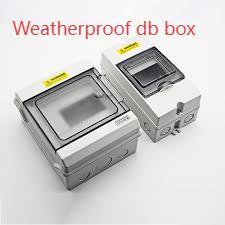
Outdoor power systems demand enclosures that keep circuits dry, secure, and serviceable in all conditions, which is why a correctly specified Weatherproof db box is essential in any installation; equipping a site with the right Weatherproof db box at the design stage prevents corrosion, short circuits, and costly downtime while simplifying future maintenance. This article walks through material choices, protective ratings, installer-friendly features, best-practice mounting, and how to plan for connectivity and upgrades without compromising environmental protection.
Materials That Withstand the Elements
Longevity starts with the right base materials. UV-stable thermoplastics resist sun-driven embrittlement and discoloration, while stainless steel and powder-coated aluminum provide superior mechanical strength and heat dissipation for industrial applications. Pay attention to fasteners and internal rails—marine-grade stainless hardware prevents the first point of failure in corrosive environments. Gasket compounds (EPDM or silicone) preserve elasticity across temperature swings, and protective coatings or sacrificial anodes can extend service life in coastal or chemically aggressive locations.
Sealing, Ratings, and Thermal Considerations
Ingress Protection (IP) and impact-resistance (IK) ratings are objective ways to match an enclosure to site conditions. For general exterior use an IP65 rating is common; where direct jets or accidental partial submersion are possible, specify IP66 or IP67. IK ratings mitigate vandalism or impact risk in public settings. Thermal behavior also matters: enclosures that house transformers, drives, or communications modules need passive heat dissipation or engineered ventilation. Any venting strategy must preserve the overall sealing plane—use breathable membranes or filtered vents that allow humidity escape while keeping contaminants out.
Nante Design Features for Installers
Practical design reduces installation time and long-term service costs. Features that installers appreciate include removable mounting plates, captive screws that don’t fall into cavities, and multiple pre-cut gland entries with integrated gland plates. Clear internal labeling, DIN-rail compatibility, and adjustable mounting bosses simplify wiring and future retrofits. Thoughtful hinge designs and tamper-resistant fasteners protect seals during maintenance. When manufacturers provide accessory kits—strain-relief clamps, spare gaskets, and pre-fitted mounting brackets—fieldwork becomes faster and more reliable.
Installation Best Practices for Durability
How an enclosure is mounted affects its performance as much as its construction. Mount on a rigid, vibration-free substrate and orient cable entries so runoff can’t pool at seals. Use correctly sized cable glands and strain reliefs to prevent conductor fatigue at entry points, and avoid over-tightening screws that can distort gaskets. In condensation-prone climates, consider installing breathable membranes or small engineered vents to allow moisture escape. Finally, document an inspection schedule—check gasket condition, fastener torque, and visual signs of ingress—to catch wear before it causes functional problems.
Applications, Modularity, and Future-Proof Planning
Outdoor enclosures serve a surprisingly broad set of functions: landscape and pool controllers, solar combiner boxes, EV charging accessories, temporary power panels, and industrial control junctions. Anticipate future equipment additions—surge protection, communications gateways, environmental sensors—by choosing deeper cabinets or modular interiors with spare DIN-rail space. Standardized mounting patterns and consistent spare-part footprints reduce lifecycle replacement costs. Investing a bit more up front for modularity prevents full-enclosure swaps as systems evolve.
Selecting the right enclosure for outdoor power means balancing environmental resistance, thermal needs, installation practicality, and future flexibility. Prioritize proven materials, appropriate IP/IK ratings, and installer-focused features to minimize downtime and maintenance costs. When possible, request test certificates and installation guides from suppliers so procurement and field teams share the same performance expectations. For tested product selections, technical specifications, and configurable options suited to varied outdoor applications, visit www.nante.com/product/

 English
 Arabic
 Spanish
 Portuguese
 Deutsch
 Turkish
 Dutch
Dutch
 Italiano
 Russian
 Romaian
 Portuguese (Brazil)
 Greek
Greek